





Finance leaders are being asked what AI can tell them about costs, cash flow, and future performance. The quality of those answers depends on a more basic question: Can we trust the transactions behind them?
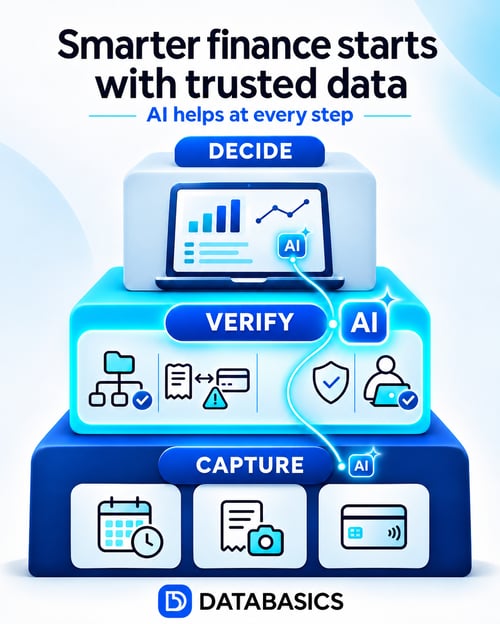 A project report may look complete even when a supplier invoice was split incorrectly, a card purchase was charged to the wrong job, or an employee expense lacks the detail needed to explain it. AI can make those figures easier to explore. Finance still needs to know how they were created.
Capture the context when the cost enters the business
For Finance, an expense report is another invoice workflow. An employee may be requesting reimbursement or documenting spending on a company card. Alongside supplier invoices, these records need evidence, a business purpose, the right accounting and project codes, and an approval path.
The timing of that work matters. Assigning a project code when the transaction is captured gives the person closest to the spending an opportunity to provide its context. Waiting until month end leaves Finance to reconstruct it.
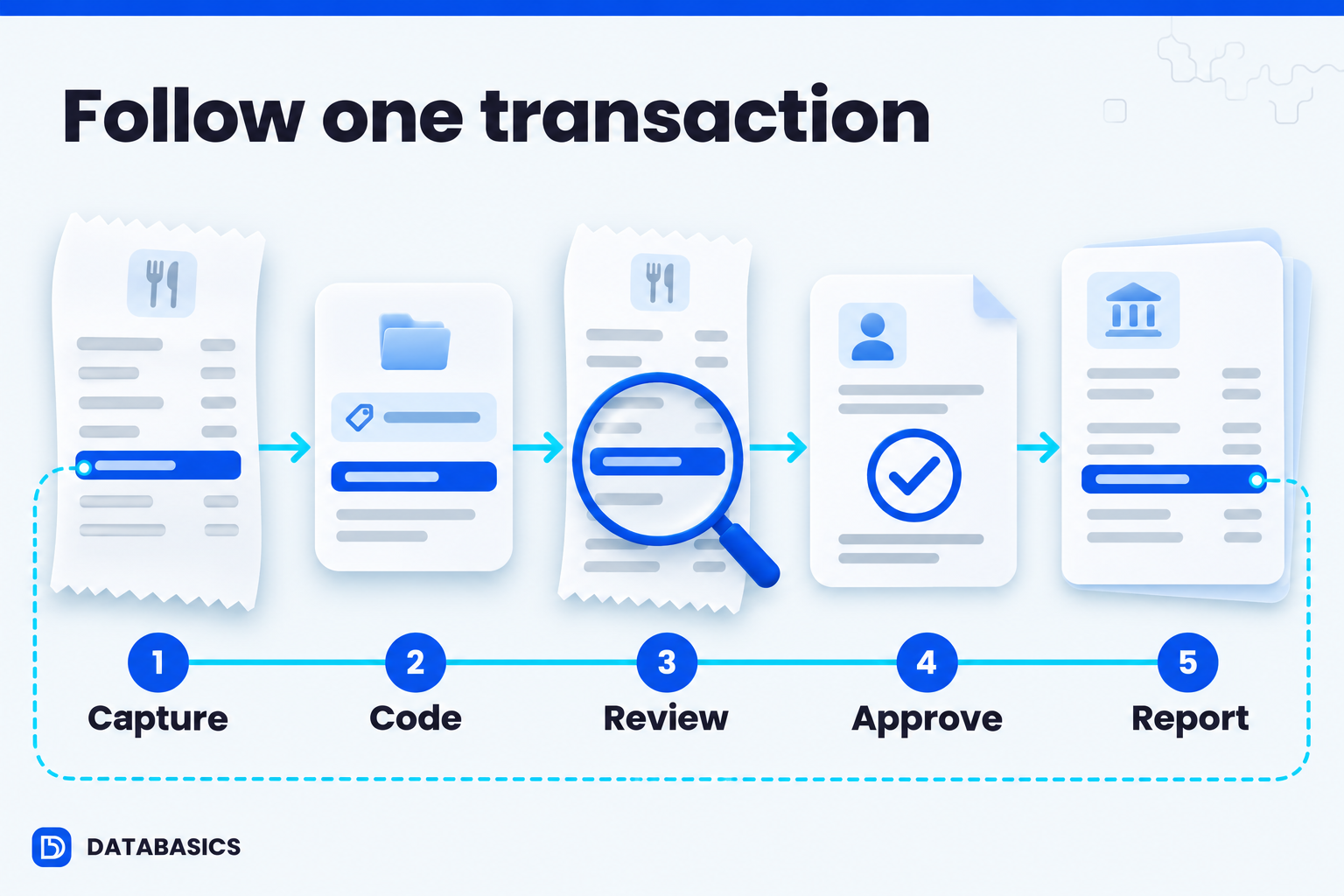
Technology can reduce the effort. Reports can be started from receipt and card data, and transactions can arrive from the card programs a company already uses. As we discussed in our recent webinar, automatically creating a report is useful automation; it should not be mistaken for AI. Its value is getting a more complete record into the workflow sooner. DATABASICS supports receipt capture, card matching, invoice intake, and cost allocation before approved information moves to AP or accounting.
Put AI to work on the exceptions
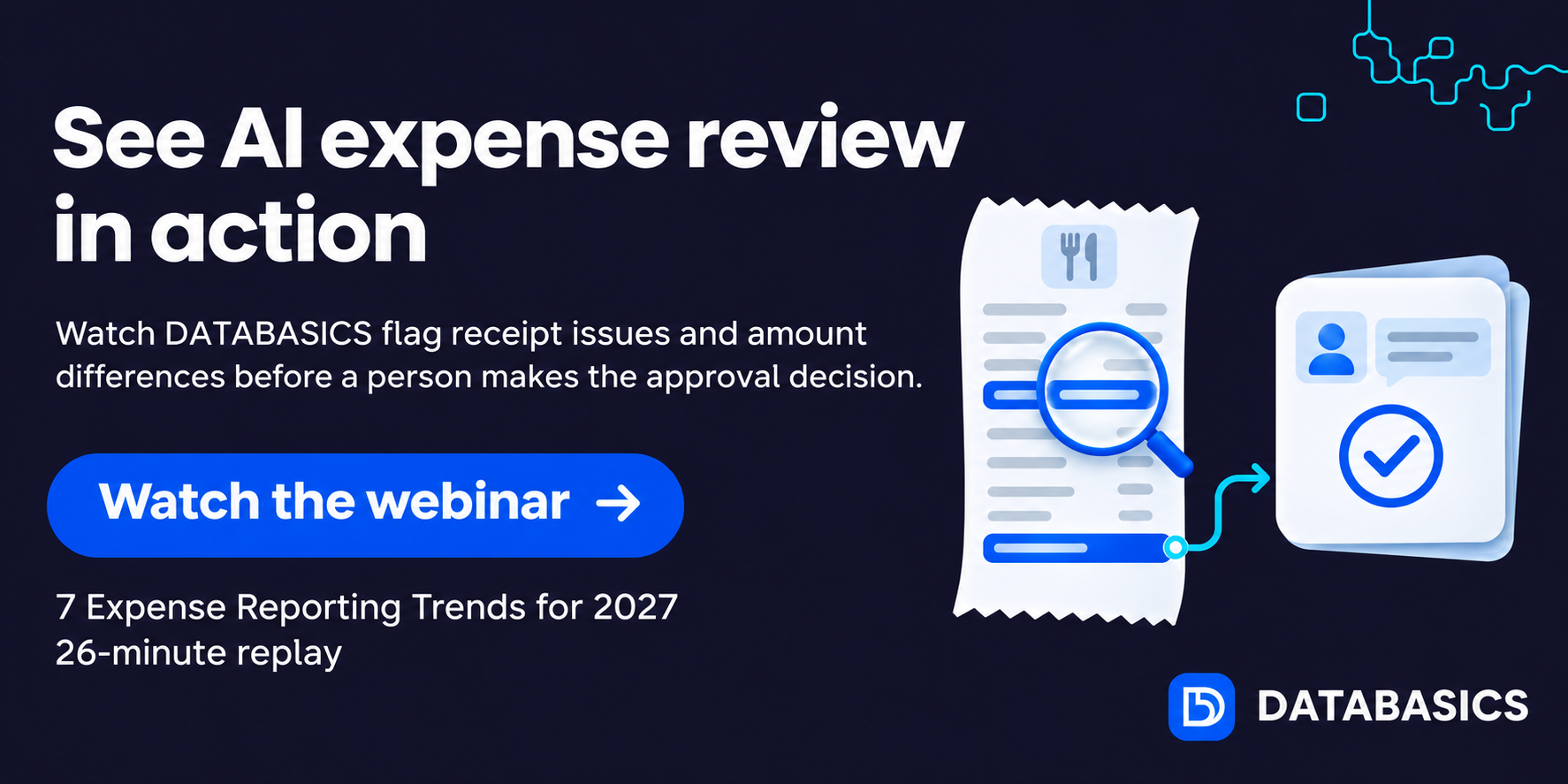
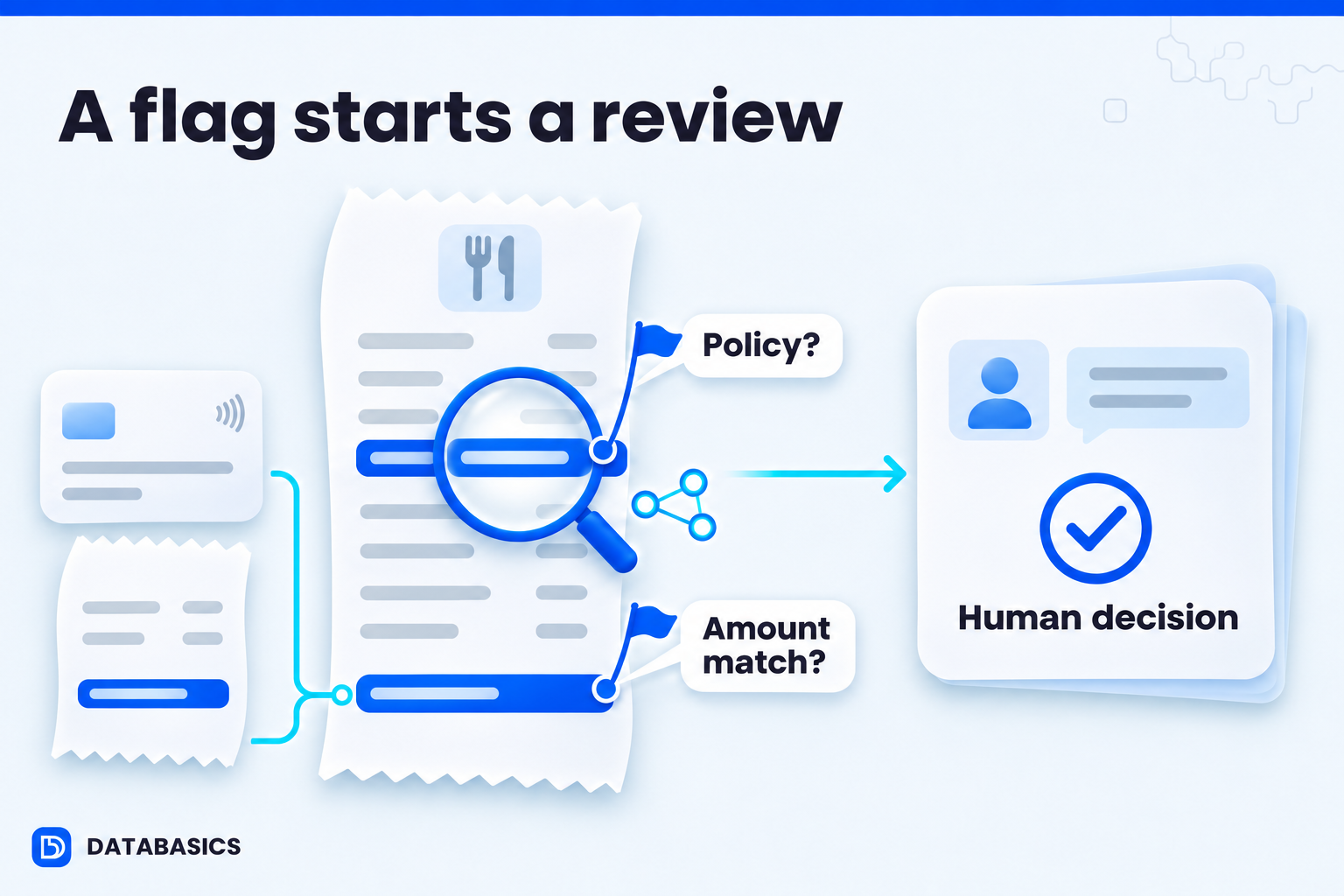 Once a transaction is captured, Finance needs to determine whether the record supports the claim. Configured rules can check requirements such as spending limits and documentation. AI can examine receipt and invoice details that are harder to review consistently at volume.
An itemized meal receipt might show a charge that requires policy review. A receipt total may differ from the card transaction. An invoice may resemble one already submitted. Each finding gives a reviewer a specific question to resolve.
DATABASICS’ AI assisted expense and invoice reviews can surface those issues before final approval. The person responsible for the decision can examine the document, the flag, and the circumstances. That keeps judgment and accountability in the workflow.
Make the answer traceable
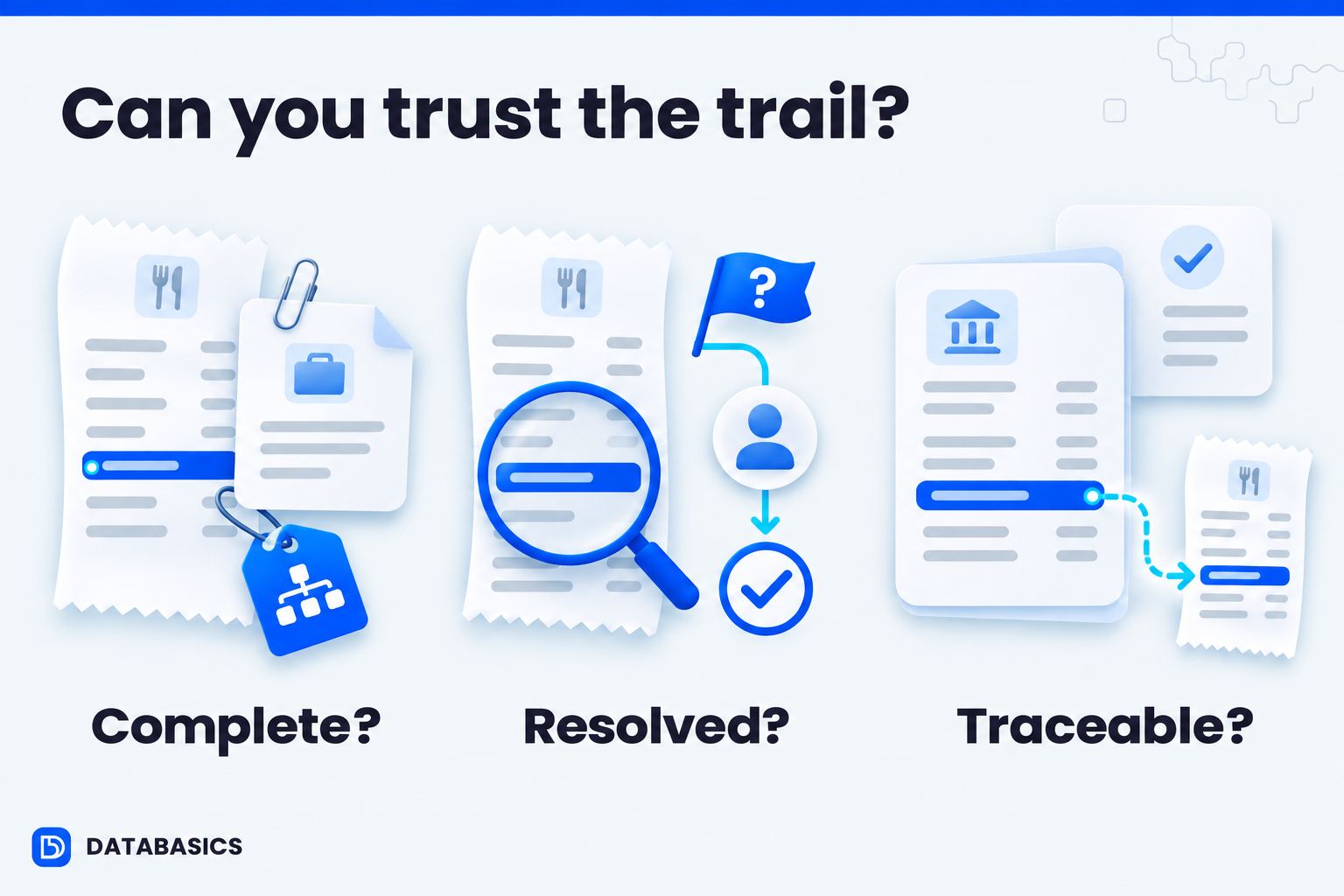 Approved transactions flow into the financial systems that remain the source of record. AI can then help people ask questions of the information available to them; DATABASICS’ DBee assistant, for example, supports plain-language questions about time and expense data. Finance interprets the answer and decides what action it calls for.
For leaders evaluating AI, I would measure progress close to the source: How many transactions arrive with complete support and correct coding? How quickly are exceptions resolved? When a number appears in a report, can the team trace it back to the document and approval behind it?
At DATABASICS, that is where we focus our AI efforts: helping Finance trust the inputs while keeping people responsible for the decisions. A smarter, safer finance future starts with the transaction.
For a closer look at the changes shaping these workflows, watch our recent webinar, 7 Expense Reporting Trends for 2027.

Trustworthy AI in Finance Starts With the Transaction
Read Now
What changes for timesheets and expense reports in 2027
Read Now
Best SAP Concur alternatives for mid-market finance teams (2026)
Read Now
What manual expense reporting costs construction teams
Read Now
Best expense software for complex approval workflows (2026)
Read Now
Expense software that works with your existing cards (2026)
Read Now
