


AI spend visibility is the ability to identify and monitor every AI-related cost across software subscriptions, embedded features, enterprise agreements, employee expenses, and usage-based charges. It gives Finance the information needed to control spending, reduce duplication, and avoid unexpected charges.
AI is creating a new expense management challenge, often before organizations have fully solved their existing spend visibility problems.
According to the Ramp AI Index for August 2026, the median AI adopter spent approximately $11.95 per employee per month in July 2026. The top 10% spent $650. The top 1% spent more than $7,400 per employee per month.
The gap is significant, and it raises an important question for finance and operations leaders. No, the question isn't what are we getting in return for our spend (that's a separate issue entirely). The question is who is managing all this AI spending?
The AI spend visibility problem
 AI spending does not always enter an organization through a single purchasing process. For instance, an employee purchases an AI tool using a corporate card. Another department acquires a different platform through Accounts Payable. Someone else submits a monthly subscription for reimbursement on an expense report.
Meanwhile, IT negotiates an enterprise agreement with another provider.
Increasingly, AI costs are also appearing inside software the organization already owns. Vendors are introducing premium AI features, per-user licenses, credit allowances, API charges, and consumption-based pricing.
Individually, each purchase may appear reasonable. Collectively, Finance may have no complete view of what the organization is actually spending on AI, and no consolidated view of ownership, usage, renewal exposure, duplication, and value.
Why AI spending is difficult to track
AI spending is difficult to track because it is distributed across employees, departments, vendors, payment methods, and pricing models.
AI-related spending can enter through corporate cards, employee expense reports, Accounts Payable invoices, departmental budgets, enterprise agreements, API or consumption charges, embedded software features, and automatic renewals.
The vendor name may not clearly identify a transaction as AI-related. A charge could be classified as software, cloud hosting, professional services, data services, or a general subscription.
Finance may not know:
- Which AI tools are purchased, approved, and used and by whom
- Whether purchases duplicate existing tools or enterprise coverage
- Whether purchases comply with security and procurement policies
- Whether costs are rising and delivering sufficient value
Finance can identify AI purchases by reviewing card transactions, expense reports, Accounts Payable invoices, departmental budgets, and enterprise agreements together. Use one classification for suspected AI charges, require an owner and business purpose, and examine vendor descriptions, embedded features, variable charges, and renewals for purchases that may not carry an obvious AI label.
Organizations cannot afford to ignore AI
 The answer is not to block or delay AI investment. Moving too slowly also creates risk. Organizations that delay AI may give up advantages in productivity, cost, decision-making, and service. Overly restrictive processes can also drive employees to buy tools outside approved channels, further reducing visibility.
The goal is to balance two priorities:
- Encourage valuable AI use.
- Maintain visibility and control over purchases, use, and value.
The FinOps Foundation's 2026 State of FinOps found that 98% of respondents now manage AI spending, up from 63% in 2025. The report identifies AI cost management as the leading skill teams need to develop and describes AI as an area with rapidly scaling spend, less predictable usage, and emerging pricing models. The survey drew 1,192 respondents from organizations representing more than $83 billion in combined annual cloud spend. Because those respondents are technology-cost practitioners, the result should not be treated as representative of every organization. It does show that AI cost governance has become a material operational concern.
Embedded AI creates another visibility problem
AI is not free for software vendors to provide. Vendors pay model providers for the requests their software makes, priced by input, output, tasks, actions, or consumption. This means some embedded AI features create a real variable cost every time they run. Security reviews, system integration, monitoring, data protection, and ongoing product development add to that cost.
A software vendor charging for an AI capability is not automatically doing something wrong. After all, an AI feature that saves a finance team hours of manual review every month may justify an additional charge. A generic summary button that nobody uses probably does not.
The same invisibility runs in the other direction, and we see it constantly. Organizations own AI capability they are not using, because it arrived in a release note nobody had time to read. Paying for AI you did not know you bought and owning AI you did not know you had are the same problem in two directions. Neither can be governed until it is inventoried.
Before enabling a paid AI feature, buyers should ask what job it performs, what measurable value it delivers, what human oversight and risk it requires, what triggers a charge, and whether the cost can be monitored and controlled. They should also confirm who can enable paid usage, whether the feature can be limited or disabled, and how pricing or allowances may change.
The answers, not the AI label, should determine whether the pricing is reasonable.
Three common AI pricing models
Software vendors are generally using three approaches to price AI. Each can be reasonable under the right circumstances.
| Pricing model | When it can be reasonable | Primary customer risk | Minimum customer protection |
|---|---|---|---|
| Bundled into an existing plan | The feature is broadly useful, its cost is predictable, and it is becoming part of the expected workflow. | Customers who do not use AI may subsidize heavy users, or the base subscription may increase later. | The vendor clearly states what is included, publishes any usage limits, and provides administrators with usage visibility. |
| Per seat or product tier | The value and usage genuinely increase with the number of enabled users. | Customers may pay for licenses assigned to people who never use the feature. | Customers can select and reassign seats, restrict access, and review adoption before renewal. |
| Usage-based or credits | Both the vendor's cost and the customer's value increase with activity. | Bills may become unpredictable, billable units may be unclear, and customers may face overages or expiring credits. | Clear unit definitions, current usage dashboards, alerts, administrative controls, and hard spending limits. |
Vendors may also use outcome-based pricing or a hybrid of subscription and usage charges. Whatever the model, Finance needs a clear unit, current usage information, administrative controls, and enough notice to plan for changes. Organizations should also confirm when allowances reset, whether credits expire, how overages are priced, and how much notice applies before pricing changes.
What the market tells us about AI pricing
What the market tells us about AI pricing
AI pricing is already shifting toward variable cost and outcome-based models
of B2B software decision-makers have already been offered a variable-cost pricing option.
have been told pricing changes like this are coming.
Preference for outcome-based pricing more than doubled in a year.
decision-makers surveyed in June 2026.
The G2 2026 Buyer Behavior Report shows that variable-cost AI pricing is no longer a fringe model. Buyers are already seeing it, and many more expect it next.
That does not make bundled, per-seat, or usage-based pricing unreasonable. It does raise the standard. Buyers should expect visibility into what is included, what triggers additional cost, and what controls are available before usage turns into an invoice.
What buyers should require
- Forecasts for likely usage
- Caps and alerts before overages happen
- Clear ownership of spend
- Admin visibility and customer controls
Bottom line: Bundled, per-seat, and usage-based AI pricing can all work for customers when the vendor provides visibility, clear unit definitions, administrative controls, and no surprise fees.
Five questions to ask a vendor before enabling a paid AI feature
1. Value. Can the vendor explain the specific job the AI performs and the outcome the customer can measure? Time saved, fewer manual reviews, faster approvals, and more consistent identification of exceptions are measurable outcomes. "More AI" is not a value statement.
2. Visibility. Does the customer know what is included in the base price and what creates an additional charge? The vendor should explain what unit is being counted, how allowances are calculated, when they reset, whether unused credits expire, how overages are priced, and where administrators can monitor usage. In our own renewal conversations, the first pricing question finance teams ask about an AI feature is what unit is being counted. That is the right first question, and customers should be able to monitor usage before the invoice arrives.
3. Control. Can administrators control who enables paid AI capabilities? Buyers should ask which budgets, alerts, access restrictions, and spending limits are available for each usage-based charge. Pay-as-you-go billing should not be activated accidentally because an employee clicked the wrong button.
4. Choice. Can the customer decline an optional AI feature or enable it only for selected users and workflows? If AI has become essential to the core product, the vendor should explain that change instead of quietly adding the cost at renewal.
5. Notice. Will the vendor disclose material changes to pricing, allowances, credits, or overage rules early enough for the customer to budget, evaluate alternatives, or change its configuration? A fair price can still become an unfair surprise when it is introduced without sufficient notice.
The question that is not about money
In practice, cost is rarely what stops an AI feature from being enabled. Most organizations now run an AI governance review, and it asks a different set of questions. In our own customer conversations the list is consistent: which model powers the feature, how often it is wrong, whether its behavior is predictable or probabilistic, how much human review it still requires, what data is sent and what the vendor retains, whether a zero data retention policy applies, and how all of it is logged for audit.
Legal and security own that review, and it tends to arrive after the budget conversation rather than before it. Ask for that documentation when you ask about price. A vendor that can answer the cost questions but not the data questions has given you half an answer, and the half it is missing is the one your security team will stop on.
Visibility should come before analysis
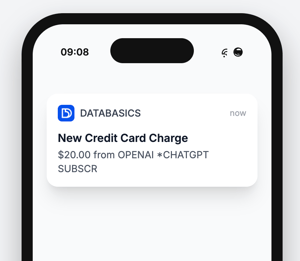 Organizations are increasingly asking AI to analyze spending, identify exceptions, improve approvals, and automate financial processes.
Those capabilities can provide significant value, but AI does not automatically eliminate fragmented financial operations. In many cases, it can introduce another layer of fragmentation.
If corporate card transactions, employee reimbursements, vendor invoices, subscriptions, and enterprise contracts are managed through separate systems, AI may be analyzing only part of the organization's spending.
An intelligent analysis of incomplete data is still incomplete. We recently worked with a finance team that could not forecast its own expense volume for the coming year, because several of its sites still ran on paper and spreadsheets. No AI capability answers that question. Connected data does.
Before organizations ask AI to manage or analyze their spending, they need the fundamentals in place:
- Consistent classifications and purchasing policies
- A named owner and business purpose for each AI service
- Connected transaction and accounting data where the organization's systems support it
- A review process for usage, duplication, renewals, and value
The technology may be new. The operational principle is not.
Five questions for finance leaders to ask internally
As AI adoption accelerates, CFOs and finance leaders should ask five questions inside their own organizations:
- What AI services is the organization paying for?
- Who owns and approved each purchase?
- Do any purchases overlap with other subscriptions or enterprise agreements?
- Which charges are fixed, and which vary with usage?
- Does each investment follow policy and provide enough value?
These questions are not intended to slow adoption. They are necessary to make AI adoption sustainable, secure, and financially responsible.
Where DATABASICS stands
DATABASICS pricing is based on factors such as the number of users, selected modules, product tier, functionality, and contract length. AI capabilities follow the same structure. Some are part of the module you license. Others are priced separately. AI Expense Approval is priced by the volume of reports it reviews, and you choose that volume. Anything else it requires is quoted with it, before you agree to it.
Here is the part that matters more than the price: no AI capability is charged unless it appears on your order form. Nothing turns itself on, and no AI feature starts billing because someone in your organization clicked a button.
Our principle is straightforward: AI features may cost money. Surprise AI fees should not.
That commitment is easier to keep because our team stays involved after the contract is signed. When a customer's classification scheme, approval rules, or allocation structure needs to change, our team makes the change with them rather than handing them documentation. We call that Service as Software.
Evaluating AI Expense Approval

DATABASICS AI Expense Approval shows how an AI feature can deliver measurable value by reviewing receipts and line items against your defined policies before a report reaches a human approver.
It can identify:
- Receipt and itemization gaps, including alcohol on meal receipts
- Duplicate payment risk and miscategorized charges
- Date and amount mismatches
- Payment-type errors
It is a pre-approver rather than an approver, and every report still reaches a person. The objective is to focus human attention where it is most valuable, not to remove human responsibility from the approval process. The measurable result is passes per report: an approver looks at a report once instead of sending it back twice.
One effect we did not anticipate, and now hear from multiple customers: submissions get cleaner before the review happens. Employees learn which human approvers can be brushed past and which line items go unchallenged. An automated first check applies the same rule every time, so that avenue closes, and people revise how they submit in the first place. Part of the value of an AI review step shows up in the reports that never needed correcting.
Another AI capability we provide is DBee, the DATABASICS AI Assistant, which lets users ask natural-language questions about reports, receipts, time, and expenses within their workflow. DBee draws only on DATABASICS data, scoped to what the user's security profile already permits, and it does not reach outside the application. Because each interaction uses hosted AI models, the feature carries a real usage cost. Organizations should weigh that cost against its measurable value and maintain control over how it is used. We apply the same five questions to our own features.
From AI spend visibility to AI spend management
The first step does not need to be another complicated purchasing process. It should be better visibility.
Organizations can improve AI spend visibility by taking five practical steps:
- Create a consistent way to classify AI purchases.
- Assign an owner and business purpose to each service.
- Apply approval rules across the purchasing channels the organization uses.
- Review duplicate subscriptions, variable charges, and renewals.
- Measure adoption and value before expanding or renewing the investment.
DATABASICS can bring expense reports, supported card activity, allocations, approval workflows, and accounting exports into a connected process based on the customer's configuration. Consistent data makes it easier for finance teams to identify exceptions, apply configured controls, and review spending.
Once that information is complete and consistent, AI can be used more effectively to identify exceptions, enforce policies, reduce duplication, and support better decisions.
Controlling AI spend while taking advantage of the AI opportunity
 The discussion around AI investment often begins with one question: "How much value are we getting from AI?"
That is an important question, but it should not be the only one. Finance and operational leaders must also ask: "Do we know how much AI is costing the organization?"
Organizations should not miss the AI opportunity because they are afraid of losing control. At the same time, they should not adopt AI so quickly that spending becomes fragmented, invisible, and impossible to manage.
The immediate response to this issue might be to pull up the ladder and take a pause. We suggest another way. Getting the real data around the actual cost means that you can have better visibility into spend and get more control over that spend while preventing any surprise fees.
It's impossible to intelligently manage what you cannot consistently see. As AI spending accelerates, visibility will become the foundation for controlling costs, managing risk, eliminating duplication, and ensuring that AI investments deliver measurable business value.
Book a demo to discuss how DATABASICS can connect expense, card, approval, and accounting workflows for your organization's configuration.

Best DCAA timesheet software for government contractors (2026)
Read Now
Expense Reporting Compliance: Policy to Audit Trail
Read Now
From Timesheet to Audit Trail: Building Compliance Into Time Reporting
Read Now
Dynamics GP to Business Central Migration: What Happens to Your Timesheets and...
Read Now
Unify Timesheets and Expenses to Speed Project Billing
Read Now
Evaluating NetSuite? Five Timesheet and Expense Reporting Questions to Ask...
Read Now